 Intervou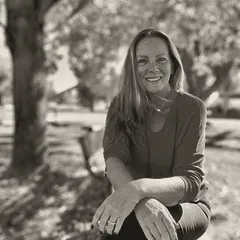
An Intervou with Lori McGee Nowaski
Background
Lori McGee Nowaski, in profile
Lori has been in the commercial insurance industry for over 38 years. She started as a bookkeeper and commercial assistant, moved to account manager, and eventually found her forte as a producer. She loves the retail side and assisting clients with their needs - advising and guiding business owners on how to protect their business, assets and products so they can focus on running the business.
In Their Words
Lori, in their own words
A lightly edited transcript of Lori McGee Nowaski's Intervou video interview.
How do you inspire and motivate your team during periods of uncertainty or change?
I have had this come up. Being a commercial insurance producer, I worked for an agency and was with my team for several years. And the owner of the agency decided to retire and move out of state. He sold the agency to one of the big brand agencies that's out there. And it caused a lot of uncertainty. We didn't know: were we going to be able to stay together as a team? Were they even going to hire us? Were things going to change? How much was going to change?
So I got my team together, sat down with them, and said, "I am right here with you. I will hold everybody's hand through this. I will fight for all of our positions." I will fight for fairness with the new agency that was buying us and to make sure we could keep doing what we did, because I knew we serviced our clients to the highest degree possible.
So I worked with them. Let your team know you're right there with them. You're not some high and mighty, I'm going to do what I need to do for me and let them fall by the wayside. If you're a team, you're a team, and you need to be the leader of that team. Make sure everybody is accounted for. Make sure everybody is assisted. Everybody is helped through the process. That's what gets your team to follow you. And if your team is following you and supports you, you all will be a bigger success.
How do you evaluate when to take a calculated risk versus staying the course?
I had this happen just in the last couple of years. I'm a commercial insurance broker. I'd been with an agency for quite a few years, and they were not going in the direction that my clients and my needs, my specialty were going. They were no longer truly supporting what I did in the business, which was I specialized in construction. They were going more the line of your mom-and-pop type Main Street business, the small business owner who can also put their business online. They could go to a State Farm or to an online program. That's not what I specialized in. I specialize in helping the client and getting down in the trenches with them and understanding exactly what they need. And it's usually something that's more complex.
The agency wasn't wanting to support that and not wanting to put in for the contracts to use the carriers that I needed access to to fully support my clients. So I had to consider taking all of my clients and moving to another agency, which is a huge undertaking. To try to shift everybody after being in the industry for 35 years, to move all of my clients into another agency is a lot of work, and it takes over a year to finally accomplish this. So that's a huge risk, and also then, am I jumping from the frying pan into the fire? He made a lot of promises. Was he going to pull through on those with the new agency for me to do that?
The situation at the previous agency finally became untenable, and I went ahead and decided not to stay the course, to jump ship and move all my clients. And it was a risk worth taking. It turned out well.
What do you believe is the most misunderstood aspect of your industry by the public?
The most misunderstood aspect of my industry by the public is that we as your insurance agents and producers make a lot of money. We don't. The insurance companies are the ones that take in the premium, not the producers, not the agencies. The insurance companies are the ones taking the risk. Theirs is the one that's on the bottom line. So they're the ones that make the money. They're the ones that are out there buying buildings and putting their name on it. As a producer in this industry, as an insurance agent, you're given a very small piece of that.
So yes, you work on commission. But your client may be a small one whose premium is $750 a year. Well, that might mean that the agency is only getting paid 10% or $75, and then you might only be getting 25% of that. So you might only be making $20, $25 on a client that you're spending several hours on, and they think you're personally pocketing the entire $750. So it doesn't always work that way at all.
The larger clients, their premiums are tens of thousands of dollars, yes, you are making more money on. You've got that percentage that then goes to the agency, and then a percentage of that is what ends up in your pocket. Clearly, those clients, usually when they're larger, they're a lot more work, but they're worth it in the long run. All clients matter, though. No matter whether they're a big client or a small client, keep in mind that small business owner is just as important as the big one. And his small business is feeding his family, too.
What's the best piece of career advice you've ever received?
The best piece of career advice I've ever received actually didn't even end up coming from this career. It was in a job that I had done as a teenager, and I've carried it through my whole life, both professionally and personally, and it was to be efficient. Be efficient with your movements, be efficient with your time. Wasted time you can't get back, and that's one of the biggest life suckers that there ever is.
So when you're working on a project, try to do it in a timely manner, do it chronologically so you're not wasting time. You need to not put the cart before the horse. Figure out what steps you have to take. Figure out what the end result is going to be and what's going to be the best path to get there. Think about the multiple tasks you can do in the same place so you're not going back to some place multiple times, whether that be mentally or physically.
Try to take care of what you need to, and then put all the pieces in the order they need to later. But it doesn't mean you have to do every piece of it chronologically. You can take care of pieces and then put them in a chronological order later. Be efficient.
How do you maintain resilience and focus during setbacks?
Maintaining resilience and focus during a setback is important. You're always going to have setbacks in any industry, no matter what it is. You need to focus on the overall picture, take a look at it from the 10,000 ft level and the 30,000 ft level and see overall what the problem is. What is the ideal solution? What are the different paths to get there? Take a look at each of those paths and figure out which is going to be the best for, number one, your client, and for yourself, but I always put my clients first.
You need to look at it, take a deep breath, see what the options are, try the options that you think are going to be best. Hopefully they work. If they don't, figure out why they didn't work. That will help you choose which of your other options maybe is going to be the best one to take as a second option. And hang in there and keep trying until it works.
Hopefully, if you have a team behind you, you can sit with everybody, get everybody's input. You don't need to be the only one in charge. Get other people's input. But if you're mainly the boss, get the input, you make the final decision. It's your company. Take a look at what the options are and go with it. You've got the experience. Trust yourself.
More Interviews