 Intervou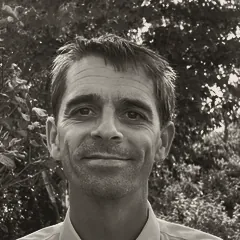
An Intervou with Fraser Stark
Background
Introducing Fraser Stark
Husband and father of three boys, Fraser teaches English in a UK state high school two days a week and runs The Holiday Butler - looking after local people's homes, pets and gardens while they are away, alongside other gardening and odd jobs. He enjoys long-distance running and football.
The Conversation
Fraser, in their own words
A lightly edited transcript of Fraser Stark's Intervou video interview.
What leadership principle guides you most in challenging times?
For me the challenging times have been when things have gone wrong. Whether it's a small irritating problem or something really much bigger and more serious which can really threaten the business. And in those times I think it's important to really keep a grip and stay calm. Calm within yourself and calm maybe with the member of staff that might be involved and/or directly with the customer for whom the problem has occurred.
With that calmness, there needs to be coupled an honesty, an honesty with yourself, about what's gone wrong and how and why. And then an honesty with the customer, which isn't to say bearing all to them, but being credible, being truthful.
And then holding on to a belief in mutual trust really. It has worked for me in that I have to trust in the customer and the customer has to trust in me, so that we can put things right, or at least move forward from it.
What role does technology or digital transformation play in your strategic outlook?
My business doesn't rely on technology or digital means. I'm not minded that way myself as a person. And what I tried to build is something very, very local. It's about localism. It's about community. It's about people and trying to help local people with what they need and charging them for it, but being there to help.
When I launched it, counterintuitively, I had leaflets printed and I went out and I delivered four or 5,000 leaflets myself within a 10 or 15 minute drive of my own house. Literally pushing things through letter boxes, old school, meeting customers, potential customers sometimes whilst doing so.
I've resisted getting a website because I just don't want the upkeep. I have a Facebook page, but I've stopped using that. I found that the queries that came in via Facebook never led to anything. For me, it's being me, my reputation, and keeping it very local and meeting people. What I do isn't technology based at all.
What key trends do you see reshaping your industry right now?
What I do is look after people's homes, pets, and gardens when they go away. And anything else really that people might want help with or assistance with when they go away. It's called the Holiday Butler and I serve a very, very small local area because it's a business largely based on trust.
There are quite a lot of dog walkers in my area, probably low charge, perhaps cash in hand, people doing that kind of work. There seems to be an increasing number of dog sitters, house sitters. And it's all unregulated. I've tried to package all of that up into a more professional wholesale package. But I do wonder if this is going to become an industry, if it's going to become subject to regulation in some way in the next few years.
I'll keep an eye on it, seeing if anybody takes an interest. I've noticed, for example, some local authorities now have signs up saying that if you're a paid dog walker in this area, then you have to declare yourself to the authorities. They want to know that you're there making money on public ground. So I just have to wait and see on that one.
Looking back, what would you tell your younger self starting out in this profession?
I was a full-time teacher for the first 20 years or so of my adult life. And I always hugely admired anybody who ran or started up any sort of business at all, small, medium, or large. It always seemed to me an incredibly bold, brave thing to do. And equally, I was intimidated by the thought of all the knowledge and skills that are required in running one's own business that I simply didn't possess.
When I came to a point after 20 odd years in teaching that I just had to get away and I had to do something else, I came up with my business idea and I was forced to give it a go. So if I could tell my younger self something, I tried to persuade him to believe that he could do it, to give him the confidence.
I don't now feel like it's a particularly unique set of skills that are required. I've done it myself having thought that I couldn't. So it's doable. It's achievable. There is money to be earned, I think, is one of the key messages that I've learned and would pass on. Go out and find it. Go out and find the work and there's money to be made.
In your opinion, what will define successful leadership in the next decade?
I think it's going to be interesting over the next 10, 15 years as the current school age population enters the workforce. I've seen a huge change in state schools where I've worked for 20 years in the last five years. I've got three children myself under the age of 20.
And I worry like a lot of people about that generation of people having the commitment, the work ethic, the resilience to survive and achieve in the workplace. I think the best employers of the future, the near future, and the best leaders are going to have to find a way to support and train this generation of the workforce, and balancing that with the need to maintain the standards required of their workforce to be productive and efficient.
That's the challenge I think, and I think that's what will define successful leadership: balancing the human needs of the workforce with the need for efficiency.
More Interviews