 Intervou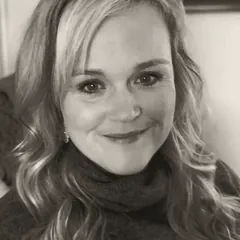
An Intervou with Brittney Hallmark
Biography
About Brittney Hallmark
Brittney is a public school teacher and instructional designer. This is her 18th year in education, and she has held many different teaching positions throughout the school system. She currently serves as a teacher leader.
In Their Words
The complete interview
A lightly edited transcript of Brittney Hallmark's Intervou video interview.
How do you inspire and motivate teams during periods of uncertainty or change?
When I'm trying to inspire or motivate teams during periods of uncertainty or change, I always try to focus on things that we're already doing that are working, that are positive, and ways that we can improve by making small changes that have big impact. Oftentimes, especially in education, we are having a lot thrown at us all the time, and there always seems to be one more thing that they're putting on our plate.
As a teacher leader, when I am trying to motivate or inspire the teams that I work with, I always try to take small bites, take things one small chunk at a time, because little things end up making big impact. But you also don't want it to be overwhelming.
Start small, allow for teams to start seeing positivity and benefit in what they're doing, and that also tends to help motivate. Always find something that you can praise, as well.
What qualities do you believe define an effective modern leader?
I believe a modern leader has to have many good qualities. I think the number one most important thing for a modern leader to have would be the ability to actively listen. Not just hear what you're saying and letting it pass in one ear and out the other, but to actually hear employees, hear team members, validate concerns, consider obstacles that they're facing, and help them bridge the gap.
It has to be someone who's willing to do everything that they're asking their team members to do. If you expect them to dive into data and find the trends and fix them, you should be willing to jump right in and also be looking at the data, trying to bridge those gaps and figure out ways to fill them.
I think a modern leader also needs to be a person who is understanding. We are humans and we need a leader who has a human side and understands when things happen outside of work or at work, anytime you're needing support.
How do you approach balancing short-term results with long-term goals?
When balancing short-term results with long-term goals, I think it's very important that you look at both sides of that. Often people get lost in the little details and they lose sight of the big picture, or if you are the opposite side of that, you may only be focusing on the big picture and not paying attention to those smaller details, and you really need a good mix of the both.
I personally like to work by something called backwards design. This is the approach that I find most helpful and most productive. I like to look at the end goal, the big result that we're trying to achieve overall, and go backwards to determine the action steps that are needed to get there.
So looking at the goal, going backwards to design milestones and check-in points along the way, and that way throughout the process, you always have time to stop and realign, refocus, recenter, get back to those smaller objectives that are going to make your long-term goal possible.
What do you believe is the most misunderstood aspect of your industry by the public?
I think that the most misunderstood aspect in the industry that I'm in is the way that decisions are made. I am a public school teacher leader, and I think that the public often thinks that teachers make the decisions. In reality, that is typically not how it works.
We may make the immediate decisions in the classroom, or the immediate behavior or instructional decisions, but the overall decisions like the literacy acts, the numeracy acts, these big laws that say if this doesn't happen, this is the result, or the way that we have to do things sometimes - that doesn't come from us most of the time. We are just like everybody else in every other industry and we have superiors who are telling us how to do those things.
So I think that oftentimes the public thinks that we get to make decisions that we don't.
Looking back, what would you tell your younger self starting out in this profession?
Looking back, if I could tell my younger self something, it would be to remember that while I love my career, this is still just a job. If something happened and I didn't go to work ever again, they would find another teacher to put in my spot.
I can remember starting out there were veteran teachers who would say to us younger teachers, "Don't work too late. Don't stay too long." And I would always just laugh as I'm working on my 13th hour at the school doing lesson plans and being prepared and doing all these things. But at the end of the day, we just need to deliver the content and the instruction and make sure that the kids that we're with feel loved and cared about.
So I would just say to remember to have a very healthy home life balance. That is important for you, for your family, for your mental well-being, and honestly for everyone that you're coming into contact with, including your colleagues and your kids in your classroom.
If you could change one thing about how your industry operates, what would it be?
I love my career as a teacher, and I think that we do a lot of things the right way, but if there is one thing that I could change about the way that the industry I'm in operates, it would be to change the way that decisions are made and legislature works. We should be listening to teachers. Teachers are the ones who are with these students all day long in the classroom. They are observing, they are working with them.
So while data is important and should drive what we're doing, there are kids who just don't test well, right? There are kids who have anxiety. And so we need to be able to factor in things besides just numbers sometimes. We need to listen to the teachers who are working with them every day, and we need to consider the professional opinion of those teachers.
And if it's a young teacher or if it's a teacher who doesn't know, that's a great opportunity to bring in others who do know, who have been doing it longer, who do have more experience, would be able to lend a hand and give some advice and put a second set of eyes on whatever the situation is.
More Interviews